Pick Me Up 3D: Taxi Game
- 4.3
- Rating
- 100.00M
- Installs
- Free
- Price

 Analysis by App-foxy
I found Pick Me Up 3D: Taxi Game most enjoyable when I treated it as a quick reflex game rather than a serious driving simulator. Its idea is simple: collect passengers, guide them through a colorful city, and get them to their destinations without turning each trip into a crash. That simplicity is exactly its appeal. I can open it for a short break, understand the objective immediately, and start playing without learning a complicated control scheme.
At the same time, the game is more repetitive than its cheerful presentation first suggests. It belongs to the casual game category, and that description matters: this is built around short, accessible sessions, not realistic traffic management, detailed vehicle tuning, or a deep story. My overall view is positive for players who want uncomplicated arcade driving, but I would not recommend it to someone looking for a full taxi-management experience.
What the taxi gameplay feels like in everyday use
The central loop is easy to understand. I move through the city, pick up passengers, and try to deliver them safely. The challenge comes from timing and attention rather than from mastering a large set of controls. That makes the opening moments friendly, especially for someone who does not usually play driving games on a phone.
You May Also Like

 AccuWeather: Weather Radar
AccuWeather Review: A Quick, Clear Forecast for Everyday Decisions
For everyday plans, the best forecast is the one you can understand quickly. AccuWeather makes rain timing, radar, and local conditions easy to act on, with a few trade-offs.

 Hill Climb Racing
Why Hill Climb Racing Still Turns Crashes Into One More Run
A tiny car, a bumpy hill and one more upgrade: Hill Climb Racing keeps resurfacing because its simple chaos makes every near-miss feel personal.

 AliExpress - Shopping App
AliExpress Makes Global Shopping Feel Personal, but Shoppers Bear the Risk
AliExpress turns a global marketplace into a pocket-sized discovery engine. Its reach is useful, its shopping loop compelling, and its trade-offs easy to miss.

 Lords Mobile: Kingdom Wars
Lords Mobile Is a Kingdom-Building Routine, Not a Quick Match
A case-by-case verdict on the building, battles, device demands, and social commitments that make Lords Mobile rewarding for some players and exhausting for others.

 PDF Scanner app - TapScanner
TapScanner Makes Paperwork Easier to Capture, Check, and Share
TapScanner makes scanning with a phone feel less like a rescue operation and more like a dependable step in getting work done. Its capture tools are useful, though not flawless.

 Block Blast!
 Shows How Much a Puzzle Game Can Leave Out
A quiet grid game shows why puzzle players increasingly value instant clarity, repeatable skill and low-pressure play—and where the genre still needs to catch up.
More From Our News Desk
View All News


One realistic use case is a short wait at a bus stop or during a coffee break. I can play a few rounds without needing to remember a long mission or reconstruct a complicated plan from the previous session. The game gives me a clear immediate task, which is useful when I want something active enough to hold my attention but light enough to put down quickly.
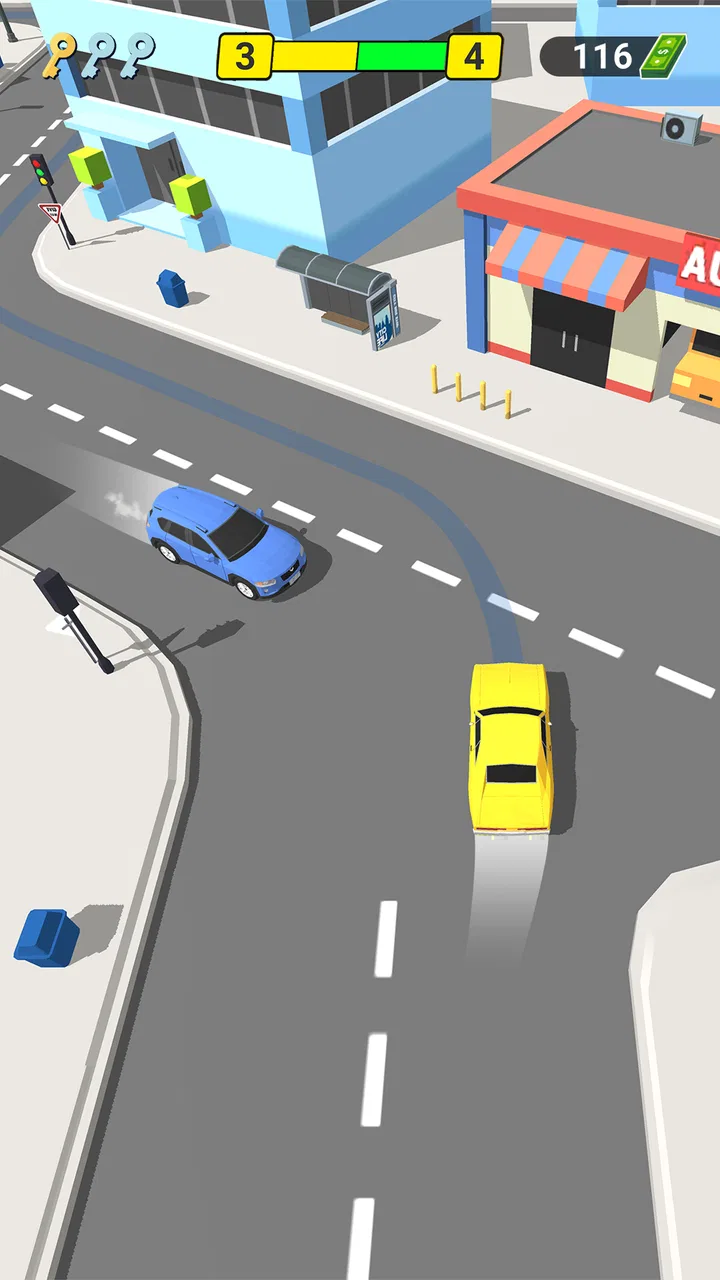
The visual presentation also supports that purpose. The three-dimensional city setting gives the taxi theme more personality than a completely flat interface would, while the casual style keeps the action approachable. I never felt that I needed to study the screen before beginning a run. The passenger-focused objective remains visible in the way the game is organized, so the experience stays readable even when I am playing quickly.
The strongest part of Pick Me Up 3D is its low barrier to entry. I do not need prior knowledge of driving games, and the passenger objective gives every session a natural sense of direction. Many casual games rely on abstract targets, but delivering people gives this one a small role-playing flavor without adding heavy dialogue or management screens.
Why the simple objective works
Taxi games can easily become overloaded with maps, fuel, vehicle statistics, upgrades, traffic rules, and financial decisions. This one takes a much lighter route. The focus stays on the immediate trip, which means I can concentrate on reacting to the road and completing the current job instead of managing a long list of systems.
That design is especially useful for younger players and anyone who prefers games that explain themselves through play. The Everyone content rating also reflects the broad accessibility of the concept. Parents looking for a non-intimidating casual game may find the passenger-delivery theme easier to understand than a combat-focused alternative, although children may still need guidance around optional spending.
Another practical strength is that the game does not demand the same commitment as a traditional simulation. A realistic taxi title may be rewarding when I want to plan routes or drive carefully for several minutes, but it can feel like work during a short break. Here, the lighter structure makes it easier to fit a session around daily routines.
Small decisions that improve a session
Although the concept is straightforward, I found that playing with a little discipline makes the experience more satisfying. My first tip is to avoid treating every movement as a race. Rushing toward the next passenger can make a simple trip feel chaotic, while a controlled approach helps me read the road and react before a mistake becomes unavoidable.
My second tip is to use the beginning of a session as a warm-up rather than immediately chasing perfect performance. The controls may feel obvious, but mobile games often respond differently from what I expect depending on how I hold the phone. A few calm trips help me settle into the timing, especially when I am playing one-handed.
A third useful habit is to decide in advance how long I want to play. Because the basic delivery loop is easy to repeat, it can be tempting to continue simply because the next trip is available. I get more enjoyment when I use it as a defined break, such as several minutes between tasks, instead of expecting every new ride to introduce a completely different kind of challenge.
Where it differs from other casual driving games
Compared with a conventional racing game, the passenger objective gives the action a more purposeful rhythm. I am not only trying to finish ahead of another vehicle or reach a finish line; I am also thinking about the person I picked up and the destination ahead. That small change makes the game feel less like pure speed testing.
Compared with a realistic taxi simulator, however, it is much less demanding. Players who enjoy choosing fares, learning a detailed city layout, balancing expenses, or customizing a vehicle will probably find this experience too streamlined. A simulation is the better choice when the pleasure comes from procedure and long-term planning. This game is the better choice when I want a bright, immediate arcade task.
It also differs from endless-runner games because the taxi role gives the session a clearer beginning-and-end feeling. Even if the underlying action remains repetitive, the destination provides a reason for each movement. That makes it easier for me to understand what I am trying to accomplish instead of simply surviving for as long as possible.
What may limit the experience over time
The main weakness is the narrowness of the core loop. Picking up and delivering passengers is appealing at first, but the same basic activity can lose some of its freshness once the initial novelty fades. The game is strongest in short bursts; I would be less enthusiastic about recommending it as the only game on a long journey or as a daily activity requiring constant variety.
This limitation is not a flaw in the concept itself. Casual games often become enjoyable precisely because they remove complexity. The trade-off is that fewer systems also mean fewer ways to create a new kind of challenge. If I want every session to feel substantially different, I may eventually prefer a broader driving game with more modes or a management game with deeper decisions.
The monetization is another point to consider. The game is free to download, with optional in-app purchases priced from $2.99 to $5.99 per item. That does not automatically make the experience unsuitable, but I would approach the purchase options carefully, particularly when sharing a device with a child. The safest approach is to enjoy the basic game first and decide later whether an optional item genuinely improves the way you play.
I also would not confuse the colorful 3D presentation with simulation depth. The city provides an attractive setting for the taxi task, but the game should be judged as casual arcade entertainment. Someone searching for authentic road behavior, professional driving procedures, or a detailed urban transportation system is looking in the wrong place.
Who should skip it
I would skip this game if my priority were realistic driving physics or a large open-world map to explore freely. It is also not my first recommendation for players who need a strong narrative, complex character development, or a wide range of strategic choices. The passenger theme adds context, but it does not turn the game into a story-heavy adventure.
Players who become bored quickly with repeated objectives should test it cautiously rather than assuming the taxi setting will provide endless variety. The simple structure is a strength for short sessions and a weakness for extended play. That distinction is important: the game is not failing when it stays simple; it is simply serving a different purpose from a deep simulation or a content-heavy driving title.
I would also think twice before spending money immediately. Since the basic appeal comes from the short delivery loop, I can judge whether that loop suits me before considering any optional purchase. If I already know that I want a more substantial driving experience, it makes more sense to choose a different category of game rather than trying to add depth through purchases.
Who will get the most from it
This is a good fit for casual players who want a taxi-themed game that can be understood almost instantly. It works well for people who enjoy quick goals, colorful environments, and light reflex challenges without a long tutorial or a complicated control layout. I can also see it working for families looking for an approachable game, provided adults keep an eye on optional purchases.
It is particularly suitable for short, interrupted play. If I am waiting for an appointment, taking a break from work, or looking for something to do before bed, the passenger-delivery format gives me enough structure to stay engaged without demanding a long uninterrupted session. The game is also a reasonable first step for someone curious about mobile driving games but not ready for a simulator.
The developer is Azur Interactive Games Limited, and the game has built a substantial audience: it has passed one hundred million installs and holds a 4.4 average from around one hundred thousand ratings. Those figures do not replace personal taste, but they do suggest that the accessible formula has connected with many mobile players.
On Android, the game requires at least Android 7.0, so anyone using an older device should check compatibility before trying it. The current version is 1.92.10, and the game was released on March 9, 2020. I mention those details because they help place the title in context: this is an established casual game rather than a brand-new experiment, and its long-running appeal comes from a compact idea that is easy to revisit.
How I would approach the first session
I would begin without trying to optimize anything. The best first session is about learning how the taxi responds, noticing how the city presents the route, and deciding whether the passenger objective feels satisfying. If I immediately focus on speed or optional items, I risk missing the more important question: do I enjoy repeating this kind of trip?
After that, I would play in short blocks and pay attention to what causes mistakes. If the problem is rushing, slowing down should help. If the problem is losing track of the destination, I would pause mentally before each movement and treat the next section as a separate task. These small adjustments are more useful than expecting the game to become a different genre through advanced settings.
For a child, I would explain the goal in plain language and discuss purchases before handing over the device. For an adult, I would simply play a few free sessions before deciding whether the game deserves a permanent place on the phone. That approach keeps the decision based on enjoyment rather than on the novelty of the taxi theme.
My final recommendation
After spending time with it, I see Pick Me Up 3D as a focused casual game with a clear identity. It turns taxi driving into a series of quick passenger trips, and that makes it easy to start, easy to understand, and convenient for small gaps in the day. I appreciate that it does not bury the central idea under unnecessary complexity.
Its weakness is equally clear: the same simplicity can make longer sessions feel repetitive. The game cannot replace a full driving simulator, a racing game, or a management title for players who want deeper systems. The optional purchases also mean I would keep spending controlled, especially on a shared family device.
My verdict is that this is worth trying if I want free, light taxi driving gameplay with an Everyone-friendly presentation and short-session appeal. I would recommend it to casual players, younger audiences with sensible purchase supervision, and anyone who likes quick reflex challenges with a small sense of purpose. I would steer simulation fans elsewhere. For the right player, Pick Me Up 3D: Taxi Game is a pleasant pick-up-and-play diversion; for everyone else, its limited loop will become apparent sooner rather than later.
FAQs for Pick Me Up 3D: Taxi Game
01What is the main objective of Pick Me Up 3D: Taxi Game?
In Pick Me Up 3D: Taxi Game, the primary objective is to pick up passengers and safely drop them off at their destinations. As you navigate through various levels, you’ll face increasing challenges such as traffic, tricky turns, and time constraints. Success depends on your ability to efficiently manage routes and time.
02Are there any in-app purchases in Pick Me Up 3D: Taxi Game?
Yes, Pick Me Up 3D: Taxi Game includes in-app purchases that can enhance your gameplay experience. These purchases typically offer options such as new vehicles, upgrades, and additional levels. While the game is free to play, these optional purchases can offer more customization and faster progression.
03What are the system requirements for Pick Me Up 3D: Taxi Game?
To run Pick Me Up 3D: Taxi Game smoothly, your device should have the latest operating system updates. For Android devices, it generally requires Android 5.0 and up, while iOS devices should have iOS 10.0 or later. Ensuring your device meets these requirements will provide a better gaming experience.
04Can I play Pick Me Up 3D: Taxi Game offline?
Yes, Pick Me Up 3D: Taxi Game can be played offline, making it convenient for users who want to enjoy the game without an internet connection. However, some features such as in-app purchases or updates might require online access, so it’s good to connect occasionally.
05How does the game handle user data and privacy?
Pick Me Up 3D: Taxi Game adheres to standard privacy practices. It may collect certain data to improve user experience, such as gameplay statistics and device information. Users are advised to read the privacy policy for detailed information on data handling and ensure they are comfortable with the data practices before downloading.
Pros
- Smooth controls for easy navigation.
- Variety of levels keeps gameplay fresh.
- Engaging graphics enhance experience.
- Quick load times for instant play.
- Frequent updates with new features.
Cons
- Repetitive tasks may bore some players.
- Ads can be intrusive at times.
- Limited customization options.
- Battery consumption is relatively high.
- Occasional lag on older devices.

Pick Me Up 3D: Taxi Game
Gallery